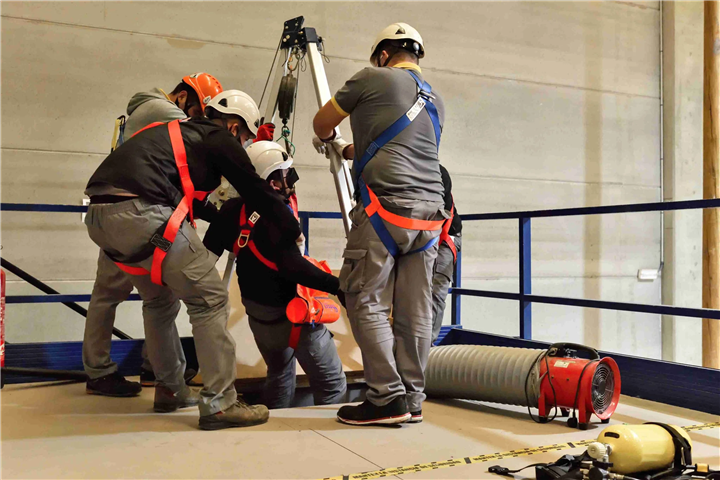
Course Description

The Confined Space Entry training course is an occupational health and safety programme designed to teach workers the hazards of confined spaces — locations not designed for continuous occupancy and with limited access or ventilation, such as tanks, vessels, pits, silos, sewers, and tunnels. This course ensures that personnel understand the dangers associated with confined space work, including asphyxiation, toxic atmospheres, engulfment, and entrapment. Emphasis is placed on hazard identification, risk assessment, permit systems, atmospheric monitoring, entry procedures, rescue planning, and emergency response. Confined Space Entry training is essential for personnel in oil and gas, petrochemical, construction, utilities, marine, and industrial sectors where confined space operations are routine or occasional. It is usually aligned with international safety standards such as OSHA (USA), HSE (UK), and relevant local regulations.

Course Objectives

By the end of this course, participants will be able to:
•    Identify confined space hazards and understand associated risks.
•    Demonstrate knowledge of legal and regulatory requirements for confined spaces.
•    Apply effective risk assessment and safe work procedures.
•    Use appropriate personal protective equipment (PPE) and atmospheric monitoring.
•    Understand emergency response and rescue planning principles.
•    Follow permit-to-work systems and communication protocols.

Audience

•    Operators required to enter or work near confined spaces
•    Supervisors overseeing confined space operations
•    HSE officers and safety coordinators
•    Maintenance and turnaround team personnel
•    Rescue team members

Prerequisites

•    Basic literacy and numeracy (reading permits, forms, monitoring devices)
•    Medical fitness for confined space work (where required by employer/regulation)
•    Prior safety induction or general HSE awareness recommended

Course Content

Confined Space Regulation and Pre-Incident Planning
Introduction to Confined Space
Confined Space Regulation
Pre-Incident Planning
Hazards of Confined Spaces
Toxic Atmospheres
Flammable Atmospheres
Asphyxiating Atmospheres
Oxygen Enriched Atmospheres
Physical Hazards
Heat Stress
Untrained Rescuers
Balancing Risks and Benefits
Monitoring Hazardous Atmospheres
Determining Acceptable Entry Conditions
Oxygen Meters
Combustible Gas Indicators
Carbon Monoxide and Hydrogen Sulfide Meters
Ventilating Confined Spaces
Confined Space Ventilation
Ventilation Devices and Safety
Determinants of Confined Space Ventilation
Ventilation Tactics
Inspection and Maintenance
Ventilation Safety
Confined Space Rescue Equipment and Procedures
Personal and Respiratory Protective Equipment
Protective Clothing
Rescue Procedures
Communication
Decontamination
Retrieval Systems
Retrieval Systems
Knots, Bends, Hitches
Rescue and Lowering Systems
Emergency Trench Operations
Protective Systems
Trench Procedures
Unsafe Trench Conditions
Confined Space Management System
Incident Management for Confined Space Incidents and Rescues

comments (0)

leave a comment