Course Description

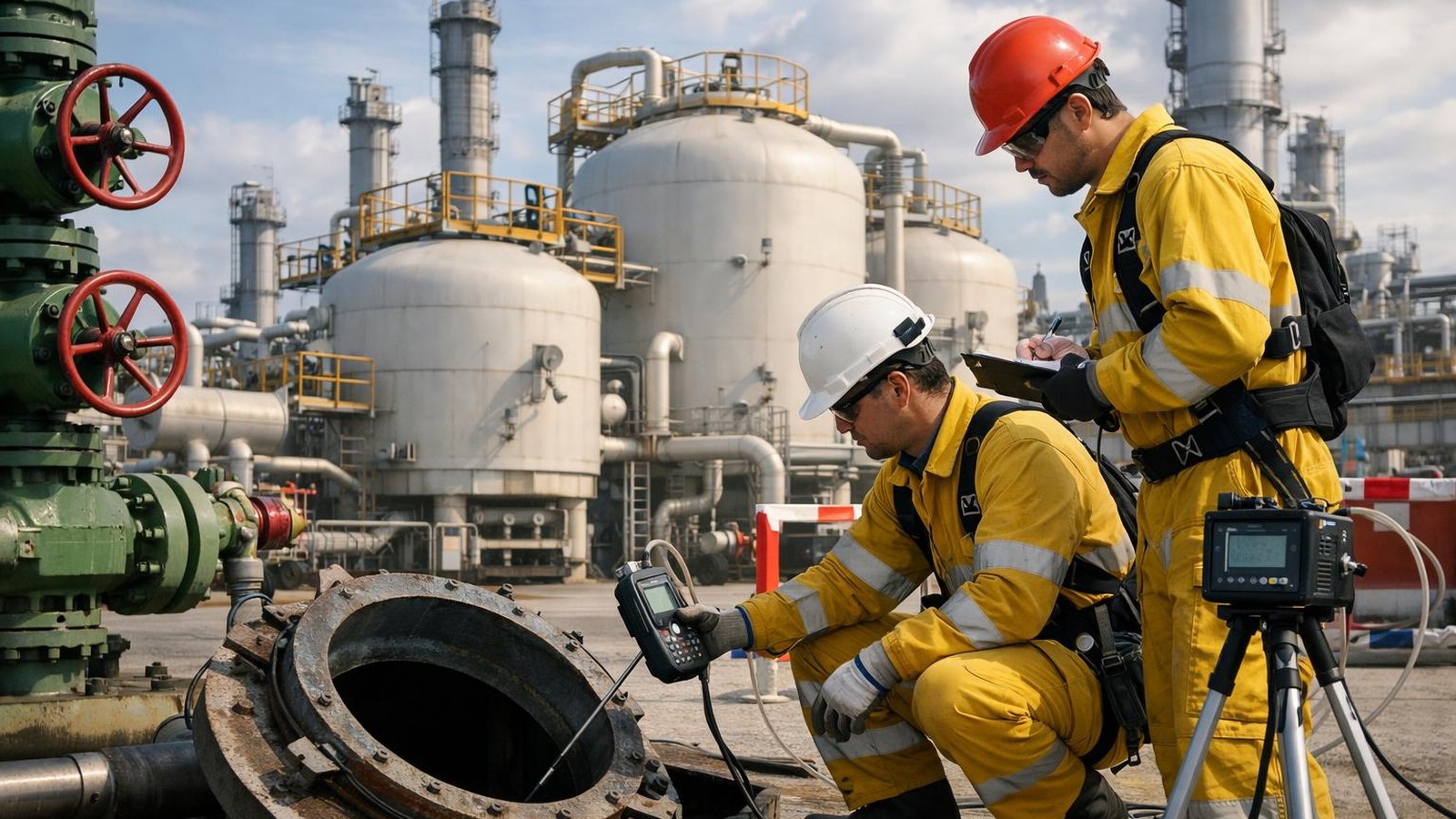
The Authorized Gas Tester (AGT) course equips personnel with the knowledge and practical competence required to assess atmospheric conditions safely before and during confined-space entry, hot work, vessel entry, and other hazardous industrial activities.

The program covers oxygen deficiency and enrichment, flammable and toxic gases, inert atmospheres, gas behavior, sampling methods, instrument selection, bump testing, calibration awareness, equipment limitations, interpretation of readings, and integration with permit-to-work and safe systems of work.

Participants develop a structured approach to atmospheric testing, continuous monitoring, documentation, communication, and emergency response in oil and gas, petrochemical, utility, marine, construction, and industrial environments.

Course Objectives

Upon successful completion of this course, participants will be able to:

Understand the principles of gas behavior and atmospheric hazards

Identify flammable, toxic, and oxygen-deficient atmospheres

Correctly operate, calibrate, and maintain gas detection equipment

Conduct pre-work and continuous gas testing

Interpret gas readings against safe working limits

Integrate gas testing results with Permit-to-Work systems

Take appropriate action in abnormal or emergency situations

Upon successful completion of this training, participants will be able to:

Understand the responsibilities of an Authorized Gas Tester.

Explain the principles of gas detection and atmospheric monitoring.

Identify hazardous gases commonly encountered in industrial operations.

Recognize the risks associated with oxygen deficiency and enrichment.

Interpret flammable, toxic, and oxygen gas readings correctly.

Select appropriate gas detection instruments for specific applications.

Conduct pre-entry and ongoing gas testing safely.

Perform gas testing for hot work activities.

Understand permit-to-work requirements related to gas testing.

Record, communicate, and document gas testing results accurately.

Identify limitations of gas detection equipment.

Apply appropriate control measures when hazardous atmospheres are detected.

Demonstrate competency in conducting gas tests according to OPITO requirements.

Audience

Authorized Gas Testers

Permit Issuers and Permit Holders

Safety Officers and HSE Advisors

Maintenance and Operations Supervisors

Confined Space and Hot Work Personnel

Oil & Gas, Petrochemical, and Industrial Workers

Those personnel required to carry out gas testing to declare safe atmosphere following operational requirement and safe system of work.

Prerequisites

Participants should:

Be medically fit for industrial site activities.

Possess basic literacy and numeracy skills.

Have basic understanding of industrial operations.

Be capable of using portable gas detection equipment.

Be

Course Content

Gas Testing Fundamentals

Module 1: Introduction to Authorized Gas Testing

Role and responsibilities of an AGT

Regulatory and industry requirements

Importance of gas testing

Safety-critical activities

Permit-to-work integration

AGT authority and limitations

Module 2: Atmospheric Hazards

Hazardous atmospheres

Flammable gases and vapors

Toxic gases

Oxygen deficiency

Oxygen enrichment

Sources of atmospheric contamination

Industrial accident case studies

Module 3: Gas Properties and Behavior

Physical properties of gases

Vapor density

Relative density

Gas migration

Stratification

Ventilation effects

Environmental influences on readings

Module 4: Principles of Gas Detection

Gas detection theory

Detection technologies

Sensor principles

Detector limitations

Cross-sensitivity

Environmental impacts on sensors

Module 5: Gas Detection Equipment

Portable gas detectors

Multi-gas detectors

Fixed gas detection systems

Detector components

Sensor types:

Catalytic sensors

Infrared sensors

Electrochemical sensors

PID detectors

Practical Session

Equipment familiarization

Detector setup

Equipment inspection

Functional testing

Practical Gas Testing Operations

Module 6: Equipment Checks and Calibration

Pre-use inspections

Calibration principles

Bump testing

Functional verification

Battery management

Maintenance requirements

Module 7: Gas Testing for Permit-to-Work Activities

Hot work gas testing

Cold work requirements

Confined space entry testing

Vessel entry testing

Excavation work gas testing

Continuous monitoring requirements

Module 8: Conducting Gas Tests

Safe approach techniques

Sampling methods

Testing sequence

Remote sampling

Multi-level testing

Frequency of testing

Module 9: Interpretation of Gas Readings

Lower Explosive Limit (LEL)

Upper Explosive Limit (UEL)

Oxygen concentration limits

Toxic gas exposure limits

Alarm settings

Determining safe conditions

Module 10: Documentation and Communication

Recording results

Gas test certificates

Permit documentation

Reporting abnormal findings

Handover requirements

Communication with work parties

Module 11: Emergency Response

Unsafe gas readings

Detector alarms

Work stoppage procedures

Escalation process

Incident reporting

Emergency actions

MEDICAL FITNESS

Training may be physically demanding orstressful nature. Any personnel attending training must be fit to attend training. Each delegate is required to declare that they are fit to attend training upon arrival through appropriate medical screening form.

comments (0)

leave a comment