Course Description

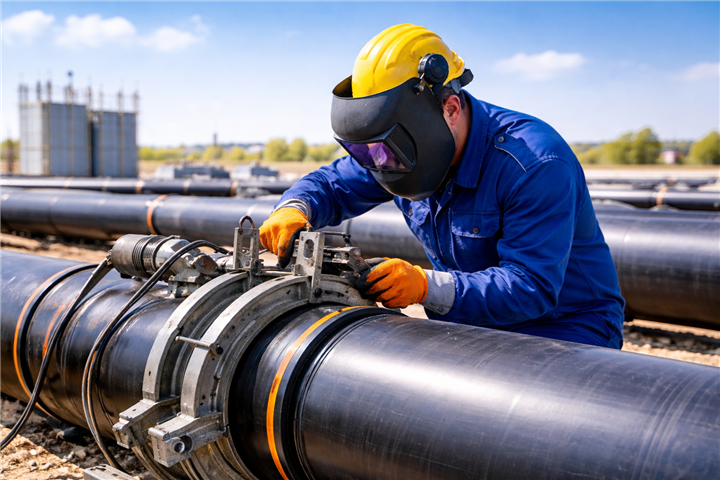
High-Density Polyethylene (HDPE) piping systems are widely used in oil & gas, water transmission, wastewater, mining, power plants, and industrial infrastructure due to their flexibility, corrosion resistance, and long service life. The Certified HDPE Pipe Welder training course is designed to provide participants with comprehensive theoretical knowledge and practical skills required to safely and effectively perform HDPE pipe welding in accordance with international standards.

This course covers the full welding process lifecycle, including material identification, pipe preparation, alignment, fusion parameters, operation of butt fusion and electrofusion machines, joint inspection, and defect prevention. Strong emphasis is placed on hands-on practice, welding quality control, and compliance with recognized standards such as ISO, ASTM, and project-specific procedures. Upon completion, participants will be competent in producing reliable HDPE welds suitable for pressure and non-pressure applications while meeting safety, quality, and environmental requirements.

Course Objectives

  • Understand the properties and applications of HDPE piping systems
  • Identify HDPE pipe grades, SDR ratings, and fitting types
  • Safely operate butt fusion and electrofusion welding equipment
  • Perform correct pipe preparation, alignment, and fusion procedures
  • Apply correct welding parameters and cooling times
  • Inspect HDPE welds and identify common defects
  • Follow welding procedures, safety rules, and quality standards
  • Produce compliant HDPE joints suitable for site and industrial use

Audience

  • HDPE pipe welders and technicians
  • Pipeline construction and installation personnel
  • Utility, water, gas, and wastewater technicians
  • Oil & gas and industrial maintenance staff
  • Mechanical technicians and supervisors
  • Contractors involved in plastic piping installation
  • Quality control and site inspectors (technical background required)

Prerequisites

  • Basic literacy and numeracy skills
  • Prior experience in piping, welding, or construction is preferred
  • General understanding of site safety practices
  • Medical fitness to perform hands-on welding tasks
  • No prior HDPE welding certification is mandatory

Course Content

  • Module 1: Introduction to HDPE Piping Systems
    • Overview of thermoplastic piping materials
    • Characteristics and advantages of HDPE
    • Common applications in water, gas, oil & gas, and industry
    • Standards and codes governing HDPE pipelines
  • Module 2: HDPE Materials and Components
    • HDPE resin grades and classifications
    • Pipe dimensions, SDR and pressure ratings
    • HDPE fittings and accessories
    • Material storage and handling requirements
  • Module 3: Health, Safety, and Environmental Practices
    • Welding hazards and risk assessment
    • Safe operation of fusion equipment
    • Personal protective equipment (PPE)
    • Environmental considerations and waste handling
  • Module 4: Welding Methods for HDPE
    • Butt fusion welding principles
    • Electrofusion welding principles
    • Comparison of fusion techniques
    • Equipment types and components
  • Module 5: Butt Fusion Welding Procedure
    • Pipe cutting, facing, and alignment
    • Heating plate operation and temperature control
    • Fusion pressure and timing requirements
    • Cooling cycle and joint handling
  • Module 6: Electrofusion Welding Procedure
    • Fitting preparation and pipe scraping
    • Alignment and clamping techniques
    • Barcode reading and parameter input
    • Monitoring and completion of electrofusion welds
  • Module 7: Welding Parameters and Quality Control
    • Fusion pressure, temperature, and time control
    • Common welding defects and root causes
    • Visual inspection of welded joints
    • Acceptance and rejection criteria
  • Module 8: Testing, Inspection, and Documentation
    • Visual inspection procedures
    • Pressure testing overview
    • Traceability and weld records
    • Site documentation and welding logs
  • Module 9: Practical Hands-On Welding Sessions
    • Supervised butt fusion welding practice
    • Supervised electrofusion welding practice
    • Real-time correction and troubleshooting
    • Best practices for field welding
  • Module 10: Assessment and Certification
    • Practical skills assessment
    • Theory knowledge review
    • Certification requirements and validity
    • Course completion and certification issuance

Certification

Participants who successfully complete the training and assessments will receive a Certified HDPE Pipe Welder certificate, demonstrating competence in HDPE fusion welding techniques in accordance with applicable standards.

comments (0)

leave a comment