Introduction to HVAC Systems
HVAC fundamentals
Heat transfer principles
Refrigeration cycle basics
Types of HVAC systems in FM
Air Conditioning Systems
Split, VRF, and package units
Components and functions
Operating principles
Cooling load basics
Chilled Water Systems
Chillers overview
Pumps and piping systems
Cooling towers basics
Flow and temperature control
Air Handling Units (AHU) & FCU
Construction and operation
Filters, coils, fans
Control dampers
Maintenance procedures
HVAC Controls & Thermostats
Control systems overview
Sensors and actuators
Basic BMS interface understanding
Troubleshooting control faults
Preventive Maintenance
PM schedules in FM
Cleaning and inspection routines
Lubrication and replacement tasks
Record keeping and reporting
Fault Diagnosis & Troubleshooting
No cooling / low cooling issues
Compressor faults
Refrigerant leakage detection
Electrical vs mechanical faults
Refrigeration & Gas Handling Basics
Refrigerants types (R22, R410A, R32)
Pressure-temperature relationship
Safe handling practices
Charging basics (theoretical + demo)
Electrical Basics for HVAC Technicians
Single phase and three phase supply
Contactors, relays, overloads
Wiring diagrams interpretation
Safety isolation procedures
Safety in HVAC Maintenance
LOTO procedures
Working at height considerations
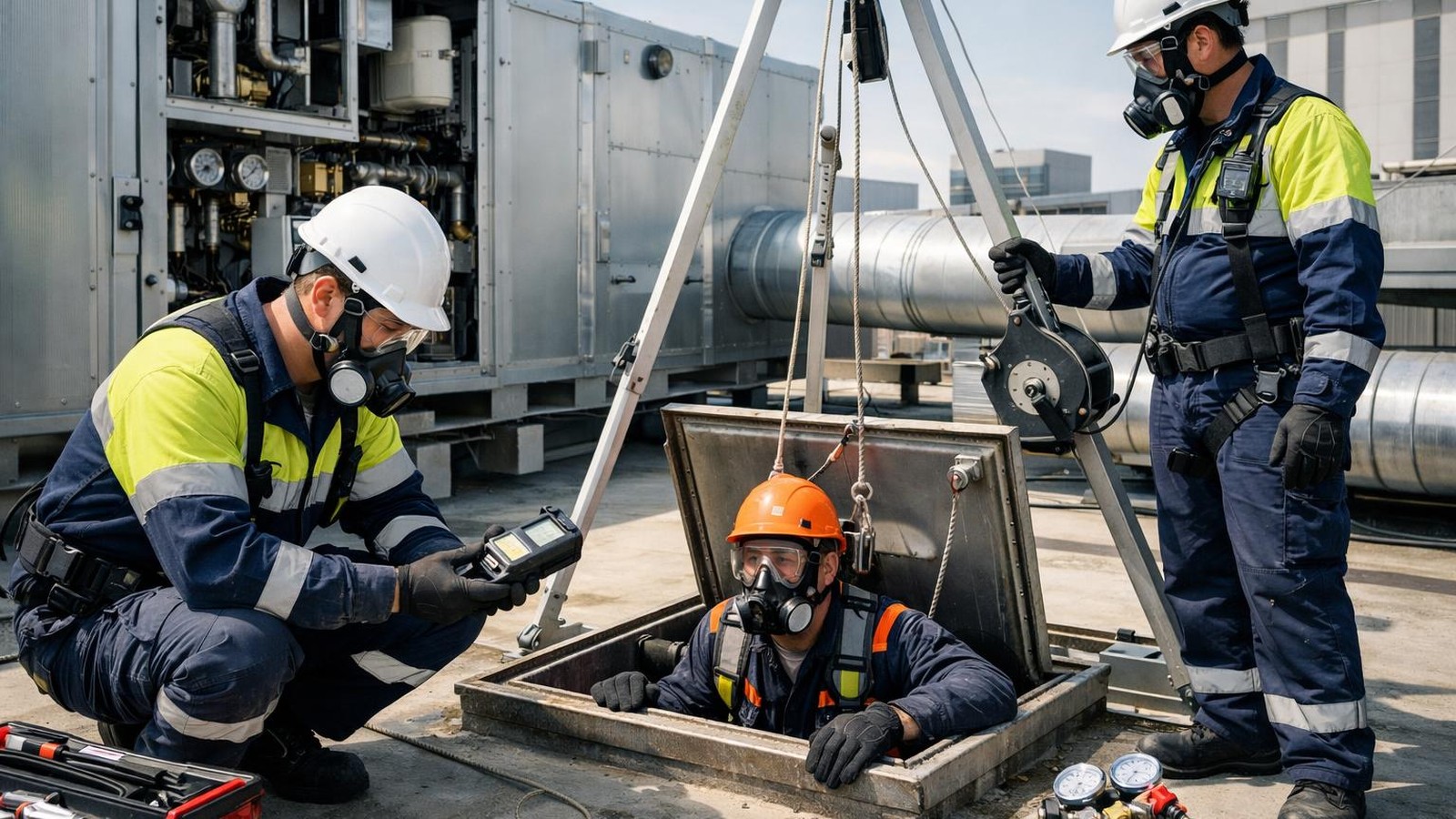
PPE requirements
Refrigerant safety and environmental rules
Expected Outcomes
Upon successful completion of this course, participants will be able to:
Demonstrate a clear understanding of HVAC system principles and components used in Facility Management environments.
Safely operate, inspect, and maintain different HVAC systems including split units, FCUs, AHUs, and basic chilled water systems.
Perform routine preventive maintenance activities in line with FM standards and manufacturer recommendations.
Identify and troubleshoot common HVAC faults such as cooling loss, airflow issues, refrigerant problems, and electrical failures.
Read and interpret basic HVAC drawings, wiring diagrams, and system layouts.
Apply correct safety procedures including LOTO, PPE usage, and safe refrigerant handling practices.
Improve system performance by supporting energy-efficient operation and reducing downtime in facilities.
Communicate maintenance issues clearly and document work activities in standard FM reporting formats.
Contribute effectively as part of a Facility Management maintenance team with improved technical confidence and practical capability.




comments (0)