Course Description

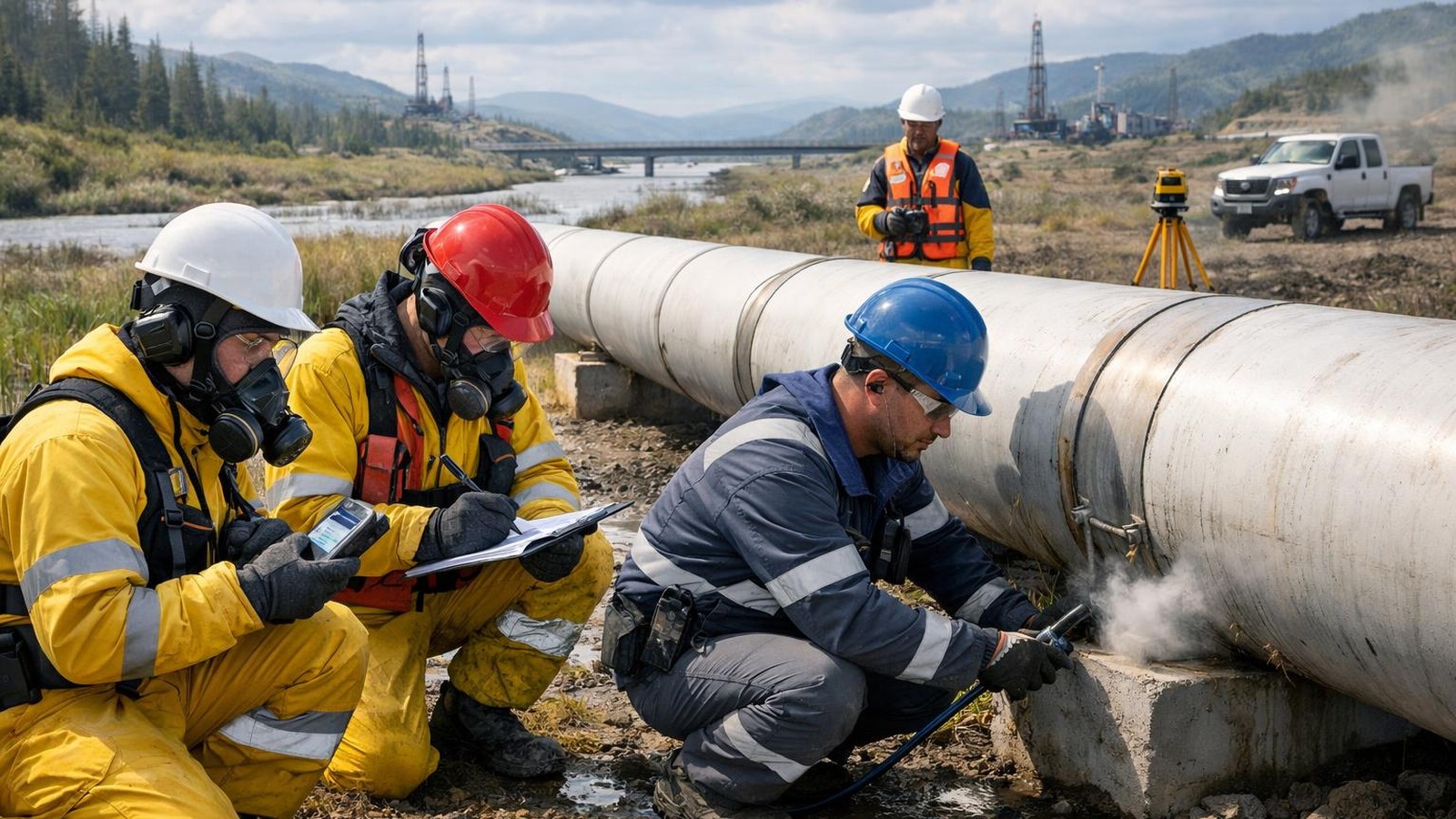
Oil and gas pipelines operate under diverse and often harsh environmental conditions, requiring robust design and operational practices to ensure stability and integrity. From underground installations to aboveground crossings in swamps, rivers, and landslide-prone soils, pipelines face a wide range of geotechnical and structural challenges. Stability failures can result in significant safety hazards, costly downtime, and environmental damage.

This intensive 5-day course provides engineers and technical professionals with the knowledge and practical skills needed to perform comprehensive pipeline stability analyses. Participants will learn to classify loads, evaluate material properties, calculate strength and deformation, analyze stability under various terrains and ballasting methods, and apply advanced software tools for modeling and verification. Real-world case studies, group activities, and software-based workshops will ensure participants gain both theoretical understanding and applied competencies relevant to operational challenges in the oil and gas industry.

Course Objectives

By the end of this course, participants will be able to:

Classify and evaluate loads and impacts affecting oil and gas pipelines.

Understand the design characteristics of pipeline materials under operational stresses.

Perform calculations for stress, deformation, and strength of underground and aboveground pipelines.

Analyze stability issues in swamps, water crossings, bubbling soils, and landslide-prone regions.

Compare and apply different ballasting methods for maintaining stability.

Develop and interpret calculation models using specialized engineering software.

Integrate theoretical knowledge with practical applications for safe and reliable pipeline operation.

Audience

Pipeline design and operation engineers

Geotechnical, structural, and integrity engineers

Oil and gas field operation specialists

Project and construction managers in pipeline projects

Engineering consultants and regulators working on pipeline stability

Prerequisites

Basic knowledge of pipeline engineering or structural mechanics

Familiarity with soil mechanics concepts

Recommended: prior exposure to engineering software (training is included)

Course Content

Fundamentals of Pipeline Stability

Introduction to pipeline systems and operational challenges

Classification of loads and impacts: internal pressure, soil loads, buoyancy, seismic and hydrodynamic forces

Safety factors and design codes (ASME, API, DNV)

Design characteristics of pipeline materials: mechanical properties, corrosion effects, fatigue, fracture toughness

Case studies of pipeline failures related to material and load mismanagement

Stress, Strength, and Deformation Analysis

Strength and deformation checks for underground pipelines under soil pressure

Aboveground pipelines: thermal expansion, support design, and structural deformation

Methods for stress and strain calculation (elastic vs. plastic response)

Worked examples: stress distribution and deformation analysis in buried vs. exposed pipelines

Practical session: applying hand-calculations and engineering formulas

Stability in Complex Terrains

General stability considerations in bubbling soils, swamps, and marshlands

Water crossings: submerged pipelines and hydrodynamic forces

Pipelines exposed to landslide-prone soils: identification, modeling, and mitigation techniques

Case studies of stability failures in swamps and landslides

Group exercise: developing mitigation strategies for real-world terrains

Ballasting Methods and Software Modeling (Part I)

Ballasting principles: concrete coating, trenching, saddle weights, and soil backfilling

Comparing methods: cost vs. performance trade-offs

Introduction to software tools for pipeline stability (e.g., CAESAR II, AutoPIPE, PIPESTRESS)

Building a basic pipeline model: inputting loads, soil conditions, and design parameters

Hands-on workshop: simple stability analysis using software

Advanced Modeling, Integration, and Case Studies

Advanced pipeline stability simulations in complex terrains (swamps, water crossings, landslides)

Result analysis and sensitivity studies (effect of soil, load, and ballast changes)

Integration of manual calculations with software results

Group project: full stability assessment of a pipeline crossing scenario

Preparing professional reports and recommendations

Wrap-up discussion, lessons learned, and Q&A

comments (0)

leave a comment