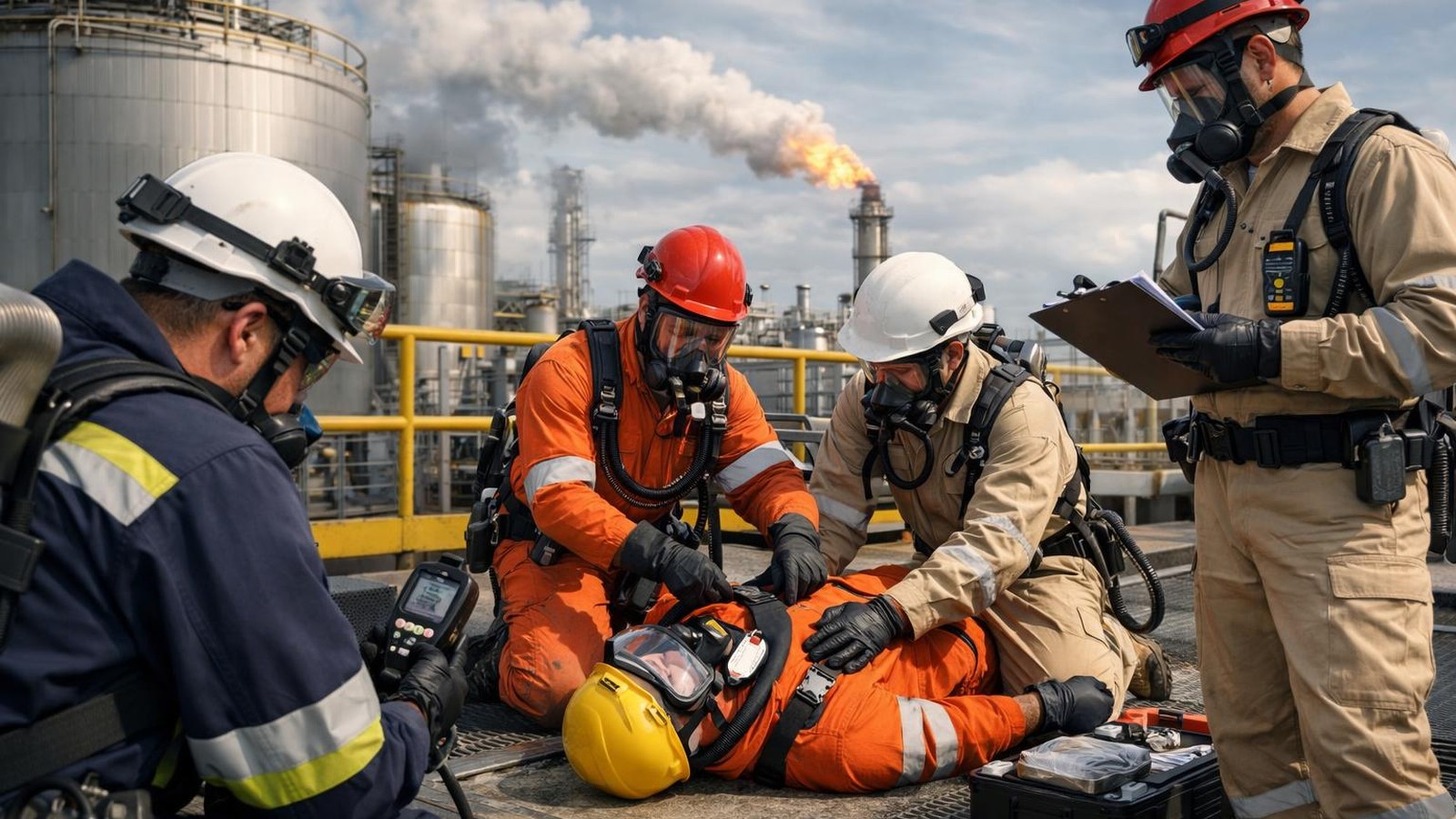
Course Description

About the Course:

This training course has been specifically designed to equip echnical,

Supervisory, Management and HSE professionals in the Oil and Gas sectors

with the knowledge, skills and understanding to become effective Safety

Leaders in this critical, high hazard industry.

On this training course, participants will learn about utilising leadership

and management techniques to control the work environment, influence

  • thers; identify and control risks and hazards, as well as create a climate

and culture for improved safety using key behavioural safety coaching and

techniques. This training course is essential for those operating and

working in high hazard and critical safety operations.

Course Objectives

By the end of this course, participants will be able to understand and apply the key concepts, tools, and practices covered in the program.

Audience

This training course is suitable to a wide range of professionals but will

greatly benefit those who operate in a technical, managerial or supervisory

capacity in the sector.

  • Technical personnel
  • Engineering/Project/Process personnel
  • Supervisors
  • Team leaders
  • Safety personnel

Prerequisites

No formal prerequisites are required. Relevant education or industry experience is beneficial.

Course Content

  • Safety critical operations and risks in the Oil and Gas Industry
  • Importance of a Positive Safety Culture in the Industry
  • Safety Leadership v Safety Management
  • From Technical/Supervisory leader to a Safety Leader
  • Behavioural Safety: concepts and the impact on safety
  • Understanding ‘‘at risk’’ behaviours (Violations and Errors)
  • Understanding your own and other behavioural styles
  • ABC model of Behavioural Change
  • Communication skills: questions and listening
  • Influencing and negotiating: skills and techniques
  • Situational awareness and human perception
  • Advanced Interpersonal skills to challenge unsafe behaviours or acts

Teamwork & Coaching

  • Defining Safety Performance
  • Setting Safety Performance criteria and objectives
  • Teamwork: principles and factors
  • Motivational factors to influence Safety Performance
  • Safety Coaching in the Process environment
  • Powerful feedback to gain safety commitment
  • Defining hazard and risk
  • Critical safety hazards in the Oil and Gas Industry
  • Risk Assessment: matrix formation
  • Control: permits, safe systems of work
  • Accident and incident investigation procedures
  • Conducting an accident and incident review meeting
  • Safety Leadership: embodying the organisation
  • Defining the vision and delivery of safety
  • Gaining support and buy-in from key stakeholders
  • Creating a sustainable safety climate and culture
  • Commitment to improving workplace safety
  • Next steps

comments (0)

leave a comment