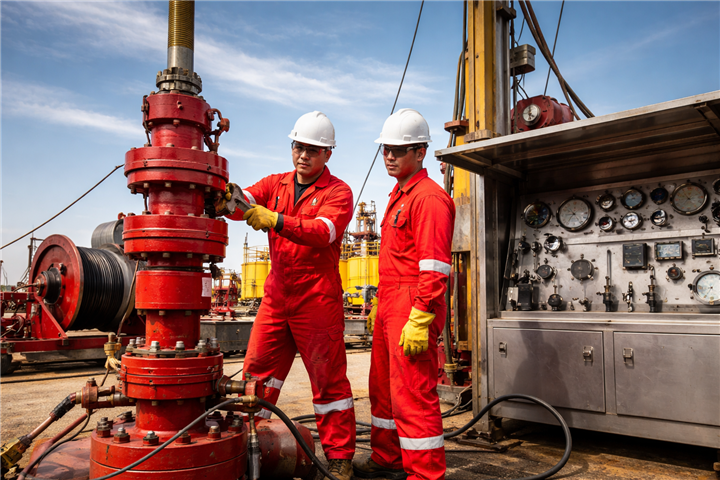
Course Description

This course is designed to provide a practical and operational understanding of slickline activities, integrating equipment operation, basic maintenance, and pressure control practices used during well intervention operations.
The program focuses on safe execution of slickline jobs, correct handling of tools and equipment, operational discipline, and awareness of pressure control requirements. Emphasis is placed on operational and preventive maintenance, equipment readiness, and risk awareness during operations conducted in pressure-controlled well environments.
The course is tailored for company personnel involved in slickline or related well services activities and aims to improve safety, consistency, and operational effectiveness at the wellsite.

Course Objectives

By the end of this course, participants will be able to:
•    Understand the principles and applications of slickline operations
•    Identify slickline equipment, tools, and their operational functions
•    Perform safe rig-up, operation, and rig-down of slickline equipment
•    Apply correct operational procedures during slickline interventions
•    Carry out basic inspection and operational maintenance of slickline and PCE equipment
•    Understand pressure control philosophy and barrier concepts
•    Recognize and manage risks associated with pressure-controlled operations
•    Apply HSE requirements and operational best practices at the wellsite

Audience

This course is ideal for:
•    Slickline Operators and Assistants
•    Well Services and Wireline Technicians
•    Production and Well Intervention Personnel
•    Field Supervisors and Shift Supervisors
•    Operations and Maintenance Engineers (operational awareness level)
•    HSE personnel involved in well intervention activities

Prerequisites

•    Basic knowledge of oil and gas field operations
•    Familiarity with wellsite activities is recommended
•    Prior experience in slickline or related well services is an advantage
•    No formal certification is required

Course Content

  • Slickline Operations – Fundamentals & Applications
    • Overview of slickline intervention and operational scope
    • Role of slickline in well intervention and production operations
    • Typical slickline work activities and applications
    • Operational limits and constraints
  • •    Slickline Equipment & Tool Strings
    • Slickline unit components and system layout
    • Winch, drum, and control systems
    • Slickline wire types and handling considerations
    • Tool string components and their functions
    • Safe assembly, handling, and usage of slickline tools
  • •    Slickline Operational Procedures
    • Pre-job planning and preparation
    • Rig-up and rig-down procedures
    • Running and pulling operations
    • Depth control and correlation concepts
    • Communication and coordination during operations
  • •    Operational Troubleshooting & Field Challenges
    • Identification of common operational issues
    • Wire handling problems and prevention
    • Basic fishing awareness
    • Decision-making during abnormal situations
    • Lessons learned from field incidents
  • •    Slickline Maintenance & Inspection (Operational Level)
    • Principles of preventive and operational maintenance
    • Pre-job and post-job inspection practices
    • Slickline wire inspection and discard criteria
    • Identification of equipment wear and damage
    • Safe storage and maintenance documentation
  • •    Pressure Control Equipment (PCE) – Fundamentals
    • Purpose and importance of pressure control
    • Pressure control philosophy and barrier principles
    • Overview of PCE components:
      • Lubricators
      • Wireline valves
      • Tool traps
      • Stuffing box concepts
    • Typical PCE configurations for slickline operations
  • •    PCE Inspection, Testing & Readiness
    • Visual inspection of PCE components
    • Seal integrity awareness
    • Pressure testing principles (theoretical)
    • Verification of equipment readiness before operations
  • •    High-Pressure Operations & Risk Awareness
    • Understanding well pressure behavior
    • Stored energy hazards
    • Risk identification and control measures
    • Emergency situations and response awareness
  • •    HSE & Operational Discipline
    • Hazard identification and risk assessment
    • PPE requirements and hand safety
    • Line tension and dropped object hazards
    • Permit to Work (PTW) and Job Safety Analysis (JSA)
    • Stop-work authority and safe communication
  • •    Best Practices & Course Wrap-Up
    • Review of operational and maintenance best practices
    • Integration of operations, maintenance, and pressure control
    • Standardization of work practices
    • Key takeaways and participant discussion

comments (0)

leave a comment